
Ask most facility managers what separates routine office cleaning from a deep clean, and you’ll get a lot of hesitation. Not because they don’t care — they do — but because nobody ever spelled it out clearly in the first place. The scope just gets described as “thorough” or “comprehensive,” which is not actually a scope. It’s a word.
If you manage an office building in the mid-Atlantic, knowing exactly what deep office cleaning services cover — and how frequently they’re actually needed — is not a luxury. It’s the difference between a facility that holds up over time and one that accumulates problems your routine crew never has the time or equipment to address.
This guide lays it out plainly: what an office deep clean actually includes, where it differs from your daily or weekly maintenance, and how to build a schedule that makes sense for your specific building.
In this guide:
- What routine cleaning actually covers — and what it misses
- The full scope of a professional office deep clean
- High-touch surfaces, floors, restrooms, and break rooms
- Recommended deep cleaning frequency by building type
- Signs your facility is overdue for a deep clean
- How to talk to your vendor about scheduling one
Why Routine Cleaning Isn’t Enough on Its Own
Daily or weekly office cleaning handles the visible stuff: emptying trash bins, wiping down desks, vacuuming, mopping, cleaning restrooms. That work matters. Done consistently, it keeps a building presentable and prevents the kind of buildup that becomes a health issue.
What routine cleaning cannot address, by design, is everything that requires equipment, time, or specialized technique that a standard nightly crew simply doesn’t carry. Floor stripping and refinishing. High dusting above ceiling tiles and on top of HVAC vents. Upholstery extraction. Grout scrubbing. Behind and beneath heavy furniture. The areas that get skipped not because the crew is cutting corners, but because the scope and the time budget don’t include them.
Over months, those skipped areas accumulate. Dust settles into ceiling vents and circulates back into the air. Hard floors lose their finish and become increasingly difficult to maintain. Grout in restrooms darkens and harbors bacteria that surface-level mopping doesn’t touch. The building looks fine on a daily walk-through, and then one day it doesn’t, and catching it up requires significantly more effort than if it had been addressed on a regular deep cleaning cycle.
That’s the actual purpose of deep office cleaning services: not to compensate for poor routine maintenance, but to address the things routine maintenance was never designed to cover.
What’s Actually Included in a Professional Office Deep Clean
A properly scoped office deep clean goes room by room and surface by surface, addressing the categories that routine service leaves behind. Here is what that looks like in practice.
High Dusting and Overhead Surfaces
Standard vacuuming and surface wiping stays at desk height or lower. High dusting covers everything above: ceiling tiles, light fixtures, HVAC vents and diffusers, the tops of partition walls, and any structural elements or exposed ductwork. Dust that accumulates in these areas eventually finds its way into the air supply and onto surfaces below. In a facility with a significant number of employees, that’s an indoor air quality issue, not just an aesthetic one.
Floor Care Beyond the Nightly Mop
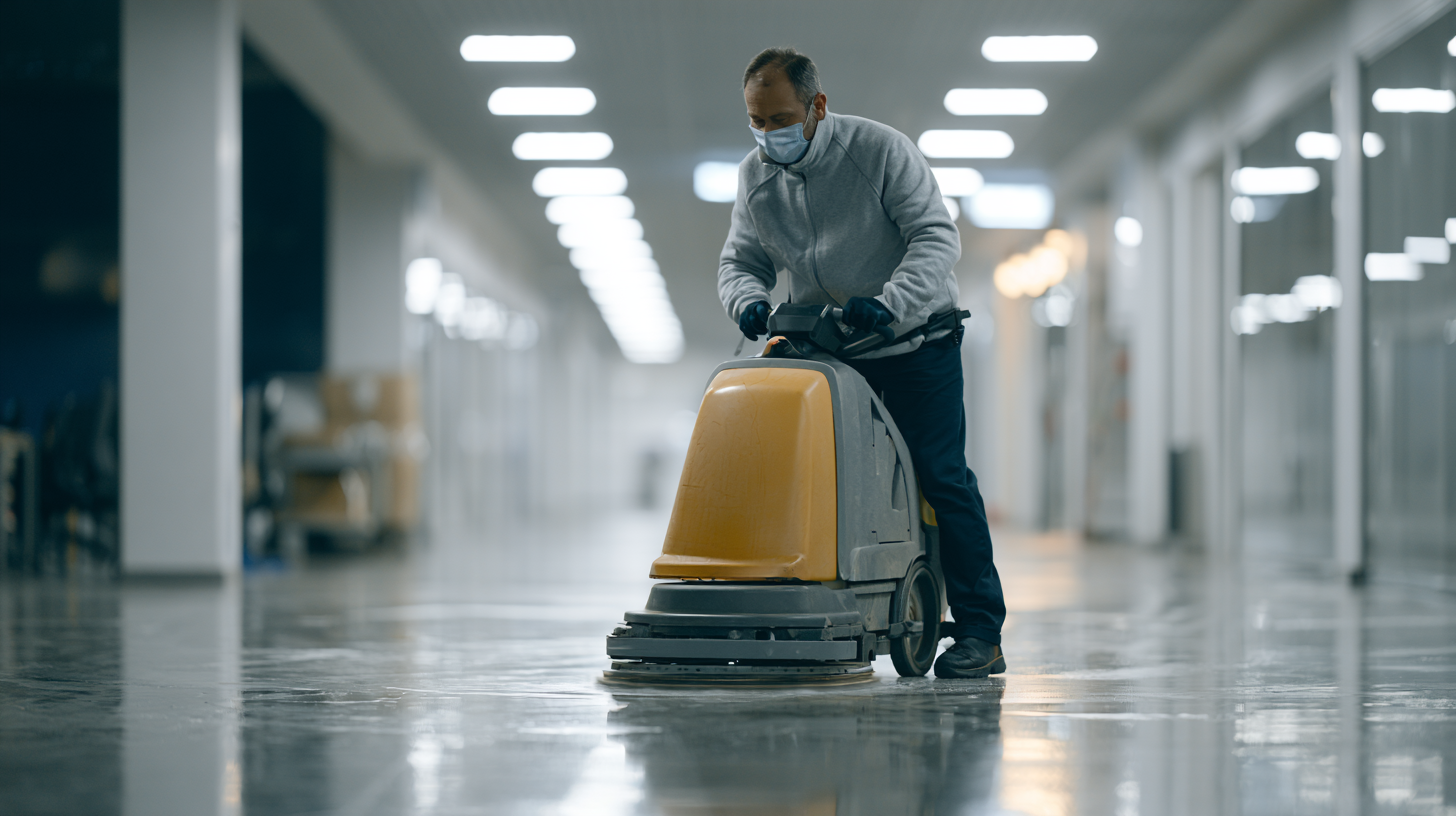
Hard floor maintenance in a deep clean context means stripping accumulated wax buildup, refinishing with fresh coats, and machine-scrubbing grout lines that routine mopping cannot reach. For carpeted areas, a deep clean typically involves hot water extraction — what most people call steam cleaning — which pulls out the particulates, allergens, and staining that sit below the surface pile and survive standard vacuuming. Properly maintained floors last longer, look better, and are genuinely easier for the routine crew to keep up between deep cleans.
High-Touch Surfaces and Frequently Overlooked Areas
Routine cleaning wipes high-touch surfaces. Deep cleaning addresses what routine cleaning misses: the sides and undersides of furniture, chair bases and casters, door frames and jambs, light switch plates, baseboards, window sills, blinds, and the surfaces around and beneath office equipment. These are not dramatic areas, but they’re consistent harbors for dust, grime, and bacteria that accumulate invisibly over weeks and months.
Restrooms: Surface Clean Versus Actual Clean
Restrooms get cleaned every day. But nightly restroom cleaning is designed for turnaround speed, not deep sanitation. It handles toilets, sinks, mirrors, and floors at the surface level. What it does not address: grout lines between tiles, the areas behind and beneath fixtures, limescale and mineral buildup in bowls and drains, caulk lines that accumulate mold, the underside of rims, and the wall areas above fixtures that see consistent moisture and get missed in a standard wipe-down.
An office deep clean in restrooms means getting behind and beneath everything, treating grout with appropriate cleaning agents, descaling fixtures, and applying a thorough disinfection protocol that meets the contact time requirements on the product label — not just a spray-and-wipe. As we cover in our guide on Commercial Sanitizing Services, the difference between sanitizing and disinfecting is not just a vocabulary distinction. It affects what actually gets killed and what doesn’t.
Break Rooms and Kitchen Areas
Break rooms are often the most heavily used space per square foot in any office, and they require proportionally more attention during a deep clean. This means cleaning inside appliances, including microwaves, refrigerators, and ovens; degreasing stovetops and surrounding surfaces; cleaning behind and beneath appliances; scrubbing cabinet interiors and hardware; and sanitizing sink basins, faucet handles, and drain areas that routine wipe-downs don’t reach. Spills and food residue that stay in place long enough create odor problems and pest attractants that become significantly more expensive to address than a scheduled deep clean.
Upholstered Furniture and Interior Glass
Conference room chairs, lobby seating, and any other upholstered furniture in the office accumulates particulate matter, body oils, and allergens that vacuuming alone does not remove. Upholstery extraction during a deep clean pulls this material out of the fabric and extends the useful life of the furniture considerably. Interior glass surfaces, conference room walls, partitions, door panels, often have fingerprints, smudging, and film buildup that goes unaddressed between deep cleans because the nightly crew is focused on the high-traffic zones.
How Often Should You Schedule a Deep Office Clean?
There is no universal answer, but there is a reasonable framework based on occupancy levels, building use, and the nature of the work being done in the space. The table below reflects general benchmarks that a qualified vendor should be able to refine based on an actual walkthrough of your facility.
| Building Type | Recommended Frequency | Key Drivers |
|---|---|---|
| Low-traffic professional office (under 50 employees) | Annually, with spot deep cleans quarterly | Limited foot traffic; focus on floors and restrooms |
| Mid-size office (50–200 employees) | Semi-annually, with quarterly restroom and break room deep cleans | Moderate occupancy, shared spaces see consistent use |
| High-traffic office or multi-tenant building | Quarterly across all zones | Heavy use of common areas, elevators, lobbies, shared restrooms |
| Healthcare-adjacent or government facility | Quarterly minimum, monthly on high-sensitivity areas | Regulatory requirements, occupant health risk standards |
| Post-construction or post-event | Immediate one-time deep clean before reoccupation | Construction debris, event residue, or extended closure buildup |
These are starting points. A vendor worth working with should walk your facility before recommending a schedule, not hand you a standard package and call it a proposal. Building age, HVAC configuration, the nature of the work being done inside, and the occupancy density during the day all affect how quickly conditions accumulate. If your current vendor has never asked those questions, it’s worth asking why.

Signs Your Office Is Overdue for a Deep Clean
Most facilities that are overdue for a deep clean don’t look like a disaster. They look fine. The problems are visible mostly to people paying close attention, and then at some point they become visible to everyone. Here are the signals to watch for:
- Hard floors have lost their gloss and look dull or streaky even immediately after mopping
- Carpet traffic lanes are visibly darker than the rest of the carpet and don’t respond to standard vacuuming
- Restroom grout is discolored or darkened despite regular cleaning
- There’s a persistent low-level odor in the kitchen, restrooms, or anywhere that sees consistent moisture
- Employees are commenting on dust, air quality, or allergen-related symptoms
- Ceiling tiles, vents, or light fixtures have visible dust accumulation
- Conference room and lobby upholstery looks tired or has noticeable surface film
- Baseboards, door frames, and window sills show consistent grime buildup
Any one of these on its own may not be a crisis. Several at once suggest your facility has gone longer between deep cleans than it should have, and catching up now will cost less than letting the conditions compound further.
How to Talk to Your Cleaning Vendor About Scheduling a Deep Clean
If your current cleaning contract doesn’t have deep cleaning built into the scope, adding it is a straightforward conversation — if you go in knowing what to ask for. “Thorough” and “comprehensive” are not scopes. Ask your vendor to walk the building with you and produce a line-item list of what the deep clean will cover, area by area.
Specifically, you want to confirm:
- Which floors will be stripped, refinished, or extracted — and what method
- Whether upholstery extraction is included or quoted separately
- How restroom deep service will differ from the nightly scope
- What products will be used and whether they carry the appropriate EPA registrations
- Who is doing the work — the regular crew with additional time, or a specialized deep clean team
- How the completed work will be documented and what you’ll receive as a record
That last point matters more than most facility managers realize. A vendor who documents the deep clean — what was done, by whom, and with what — is a vendor whose work you can verify and build on. One who considers a verbal description of the work to be sufficient documentation is not setting you up for the kind of accountability most buildings need. Our Corporate Office Cleaning Buyer’s Guide covers how to evaluate vendors on exactly this kind of accountability measure.
How The Wilburn Company Approaches Deep Office Cleaning Services
The Wilburn Company has served commercial and government facilities across the mid-Atlantic for over a decade. Our deep office cleaning services are scoped building by building, not packaged generically, because the factors that determine what a facility actually needs vary in ways that a standard proposal never accounts for.
We bring union cleaning labor with documented training, GS-42 certified green cleaning products, and a Performance Measurement Management program that produces written documentation of every scope item completed. When we schedule a deep clean, you get a record of what was done, not just an assurance that it was.
Whether you’re looking to establish a regular deep cleaning cycle, catch up on a facility that hasn’t had one in too long, or build deep cleaning into a new service agreement, our team can walk your building, identify what it actually needs, and put together a proposal with a real scope — not just a word like “thorough.”
Contact The Wilburn Company today to schedule your facility assessment and get a customized deep cleaning proposal for your building.
Contact Us
Call 410-789-3320 or visit our contact page to speak with our team directly.

Frequently Asked Questions
What is included in a deep office cleaning that isn’t in regular cleaning?
A deep office cleaning covers everything your routine service does not have time or equipment for: high dusting above ceiling height, floor stripping and refinishing or carpet extraction, grout scrubbing in restrooms, cleaning inside appliances and behind fixtures in break rooms, upholstery extraction in conference rooms and common areas, baseboard and door frame cleaning, and interior glass. The specific scope varies by facility, but the defining characteristic of a deep clean is that it addresses what accumulates between routine service visits — not just what’s visible at eye level during a standard shift.
How long does a deep office cleaning take?
Duration depends on the size of the facility, the scope of work, and how long it has been since the last deep clean. A smaller professional office of 5,000 to 10,000 square feet might take a full day for a properly staffed crew. Larger buildings are typically broken into zones completed over multiple visits so the building remains operational. Your vendor should be able to provide a realistic time estimate after walking the space, not from a square footage formula alone.
How often should you schedule deep cleaning for an office?
For most commercial office buildings in the in the mid-Atlantic, twice a year is the standard baseline for a full deep clean. High-traffic offices, multi-tenant buildings, healthcare-adjacent facilities, and government buildings typically need quarterly deep cleaning cycles, with more frequent service in specific high-use areas like restrooms and break rooms. Low-occupancy offices can sometimes manage with an annual deep clean supplemented by targeted quarterly work in the areas that accumulate fastest. The right schedule is specific to your building, not a generic recommendation.
What is an office deep clean description I can use in a scope of work?
For a scope of work document, an office deep clean can be described as: “A periodic, comprehensive cleaning service covering all building areas to a standard beyond routine maintenance. Scope includes high dusting of ceiling-level surfaces and HVAC vents; hard floor stripping, refinishing, or carpet hot-water extraction as applicable; restroom deep service including grout scrubbing, fixture descaling, and full disinfection to product dwell time requirements; break room appliance interior cleaning and surface degreasing; upholstered furniture extraction; baseboard, door frame, and window sill cleaning; and interior glass cleaning. All work to be documented with a completion log by area, available to facility management within 24 hours of service.” Adjust the specific elements based on your actual building composition.