
Choosing the lowest bid for office cleaning often leads to higher long-term costs, tenant complaints, and operational risks. A weak office cleaning service can lead to missed tasks, poor restroom care, and uneven results across your sites.
With the right framework, you can compare commercial cleaning providers with confidence. A clear scorecard helps you review office cleaning, janitorial services, and commercial janitorial services on the same scope, price, and quality standards.
What professional office cleaning includes (vs basic janitorial)
Professional office cleaning provides a structured, accountable system that basic janitorial services often lack, with formal performance standards that define specific cleaning tasks by building area types. While both handle core tasks, a professional service adds layers of detail, documentation, and specialized care that protect your facility and tenants.
| Service Area | Basic Janitorial Service | Professional Office Cleaning Service |
| Core Tasks | Trash removal, basic dusting, and vacuuming. | Detailed cleaning of restrooms, breakrooms, and high-traffic areas. |
| Disinfection | General cleaning with limited disinfection. | Targeted high-touch disinfection and outbreak response protocols. |
| Floor Care | Routine sweeping and mopping. | Scheduled deep carpet extraction and hard-floor refinishing. |
| Support | Typically after-hours crews only. | Flexible support, including day porters for multi-tenant buildings. |
| Documentation | Minimal or no formal reporting. | Detailed checklists, issue logs, and supply tracking for accountability. |
Map needs: priority areas, access rules, frequency, and hours
Before you request office cleaning proposals, map your building’s needs to avoid missed details and service gaps. Start by identifying your critical zones. Lobbies, elevators, restrooms, conference rooms, and pantries often require the highest standard of care and most frequent cleaning.
Set the right cleaning frequency
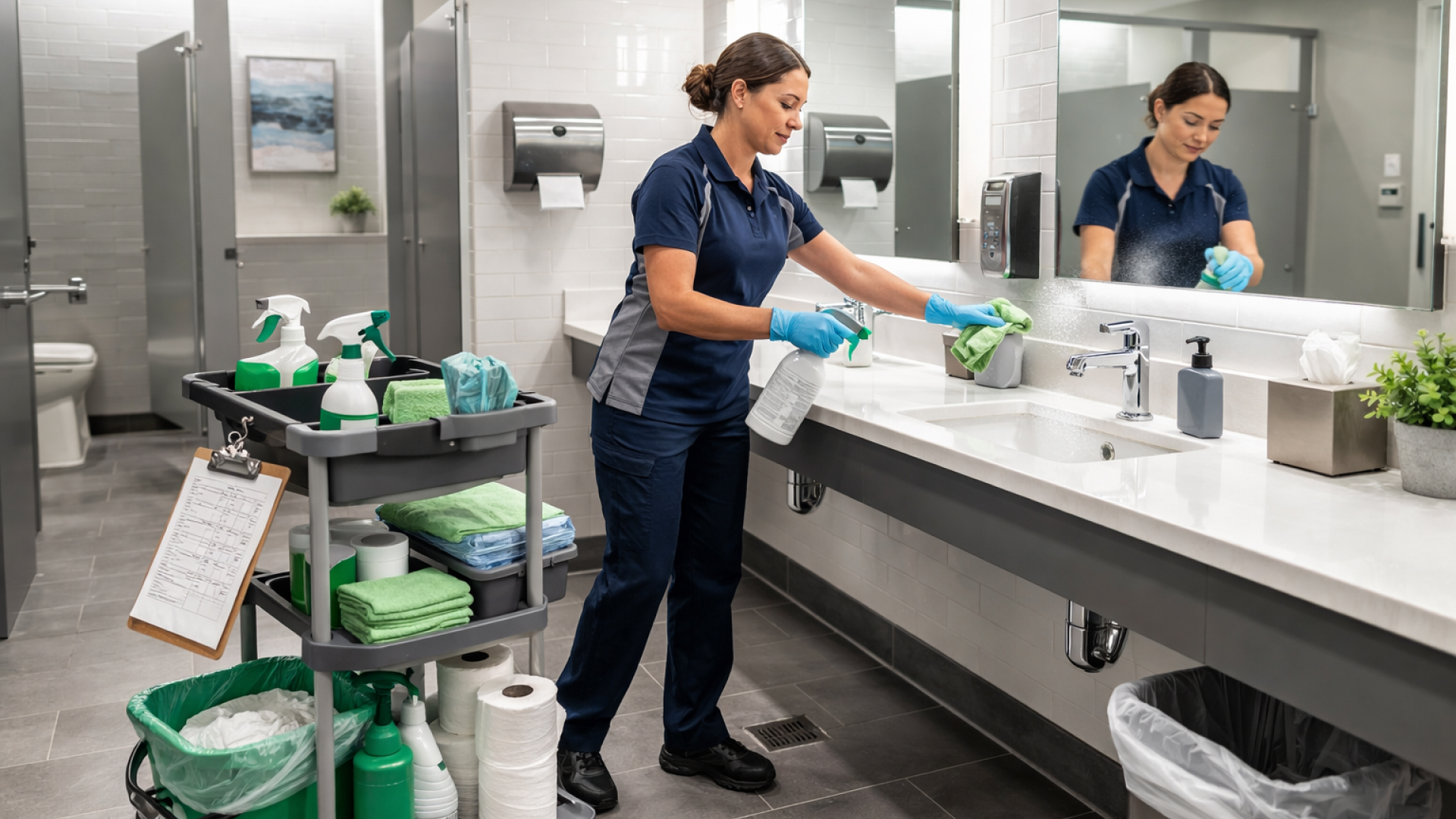
Adjust your cleaning schedule based on space type, usage, and headcount. High-traffic areas and shared amenities need more frequent cleaning. Office restrooms and breakrooms with heavy use will benefit from multiple service windows each day.
Document access constraints
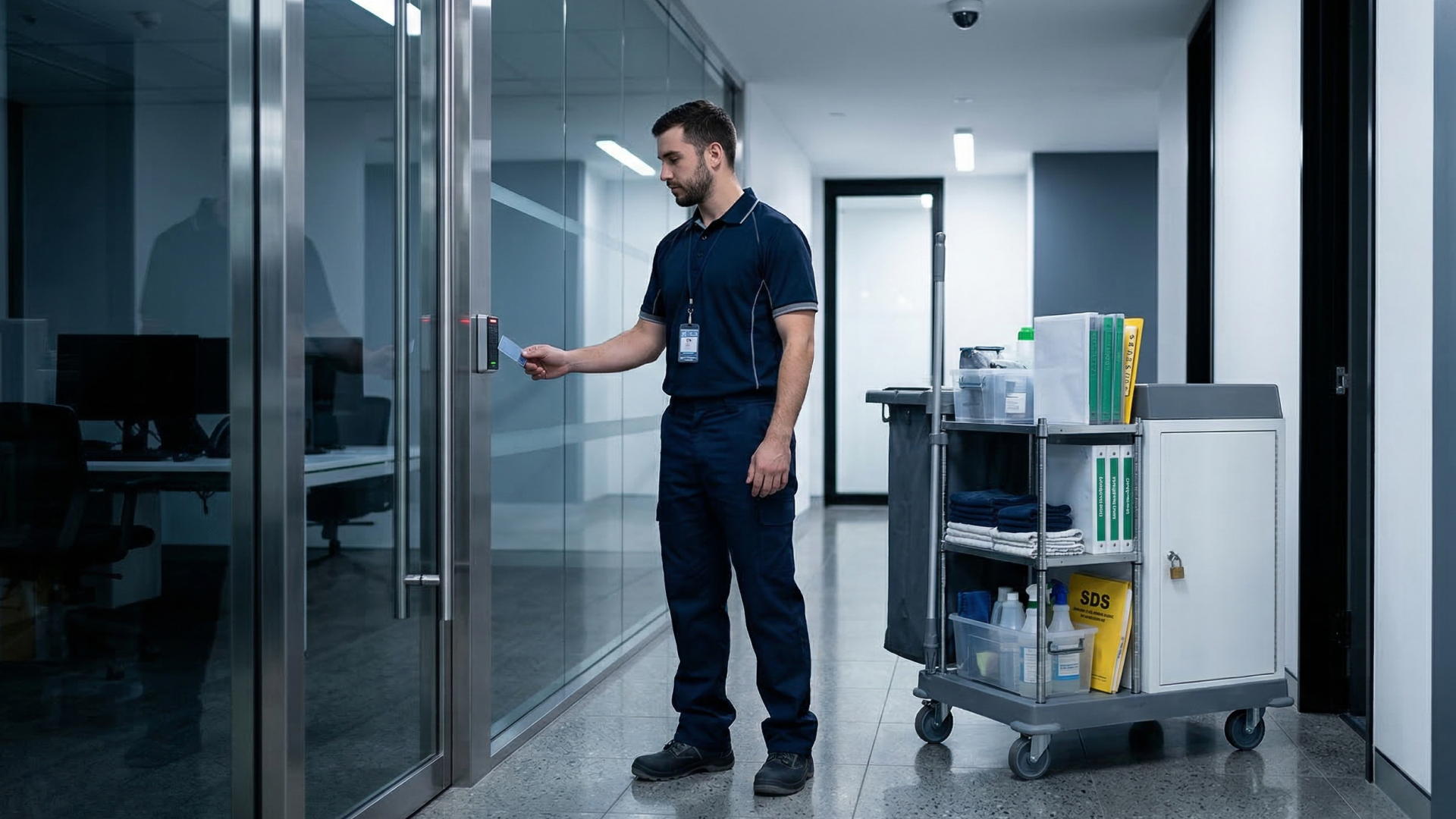
Document any access constraints that apply to your building. List keys, badges, escort requirements, tenant rules, and quiet hours. Secure areas like IT rooms, records storage, executive suites, and restricted floors often need special protocols and extra documentation.
Define what success looks like
Set clear appearance standards, response times, and complaint resolution steps. Your scope should answer key questions:
- What does “clean” look like for each zone?
- How fast should the team respond to issues?
- Where do complaints go, and how are they resolved?
Write a scope of work vendors can price consistently
A clear scope of work ensures every cleaning company bids on the same tasks and reduces the risk of missed expectations. Start by breaking down your facility into specific areas and list the cleaning tasks for each, with clear inclusions and exclusions.
- Specify consumables: Define who supplies liners, soap, towels, and hand sanitizer. Set the restocking schedule and note any brand or sustainability standards for these supplies.
- Require staffing details: Ask each vendor to state coverage hours, supervision structure, and their backup plan for absences or emergencies. Confirm if day porter or after-hours coverage fits your building’s needs.
- Include periodic services: Add periodic services like interior glass, deep restroom detail, high dusting, and floor care. Keep these separate from daily or weekly tasks to avoid change orders later.
- Attach a walkthrough checklist to every scope: This helps vendors see your space and clarify what is included, and prevents service drift and late-stage disputes over extra work or missed details.
Understand office cleaning pricing and how to level bids
Office cleaning pricing models vary, so you must know what drives your quote to compare proposals with confidence. Providers may price by square foot, by visit, by month, or by labor hour. Each model works, but only if you compare the same scope and details.
Key cost drivers to track
Several factors affect your office cleaning quote. These include:
- Layout complexity and total square footage
- Restroom count and supply needs
- Surface types and floor care requirements
- Level of daily traffic and peak usage hours
- Service window and special access constraints
When you request bids, require each commercial cleaning company to use the same task list, frequency, and supply rules. Only then can you make a valid comparison.
Review exclusions and escalation terms
Read proposals for what is not included, such as window washing, floor refinishing, upholstery care, or emergency response. Ask each vendor to outline escalation terms, including wage adjustments, cost-of-living increases, and supply price changes over the contract term.
Compare commercial cleaning companies on people and process
People and processes ultimately determine long-term cleaning quality. Start with how each cleaning company handles its hiring and retention. High turnover or weak screening can lead to service gaps and added security risks.
Staffing, Training, and Supervision
Ask about background checks, eligibility verification, and backup staffing plans. Review how crews receive training on safety, chemical use, equipment, and site rules. Strong onboarding helps staff work confidently in your building.
Supervision is a key differentiator in service quality. Reliable office cleaning requires either an on-site lead or a roaming manager who inspects work. Ask about inspection frequency and how supervisors document and resolve issues.
Communication and Proof of Performance
Clear communication is critical to maintaining service quality and accountability. Look for a single point of contact, a ticketing or issue tracking system, and defined timelines for escalation. This helps you address problems quickly and keeps services on track.
Before you make a final decision, request proof that the cleaning company has supported similar buildings or portfolios. Ask for references, sample inspection logs, and evidence of work for multi-site clients. Companies that provide documentation, results, and transparent processes tend to deliver more consistent outcomes.
Check security, insurance, and compliance before you sign
Security and compliance should be top priorities when selecting a cleaning provider. Even one gap in protocols can raise your risk and disrupt office operations.
Verify insurance and screening
Insist on proof of general liability, workers’ comp, auto, and umbrella coverage. Ask for up-to-date certificates and details on how renewals are handled. Require background checks, eligibility to work, and ID controls for all cleaning staff.
Confirm access control and compliance
Review access measures, including key logs, badge rules, alarm procedures, and secure storage for chemicals and equipment. Validate that the cleaning company fits your OSHA, site safety, and SDS access requirements. Incident reporting and compliance with your building’s emergency response plan are essential.
In your contract, define how the provider responds to spills, floods, or outbreaks, including after-hours contacts and escalation steps. A reliable commercial cleaning company will provide documentation for every safeguard, which reduces your security and liability exposure from day one.
Evaluate green cleaning and indoor air quality safeguards
Green cleaning supports sustainability while also protecting occupant health and regulatory compliance. It also helps protect health, especially since many office buildings have significant air pollution sources. Ask potential office cleaning providers to outline their green cleaning program, including product criteria, dilution control, and staff training.
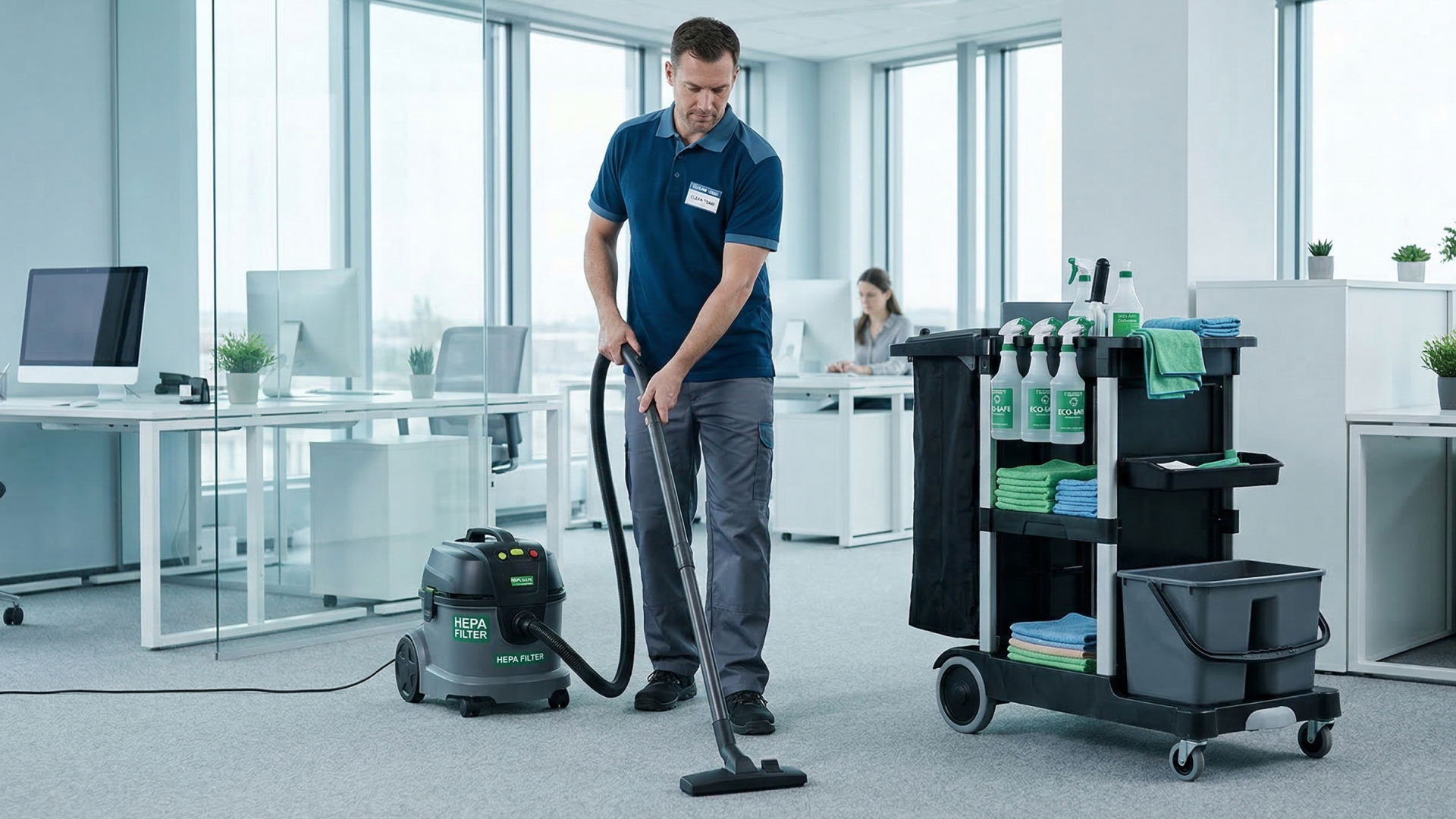
Review equipment choices. HEPA vacuums, microfiber mops, and strong filtration can improve dust removal and reduce allergens. Low-odor products and allergen controls protect occupants and improve restroom air quality.
For well-documented programs, you should request:
- Lists of cleaning chemicals and SDS sheets
- Audit-ready records and sustainability metrics
- Details on how green cleaning outcomes are tracked
A strong provider will share how their approach limits harsh chemicals and supports your EHS and tenant requirements. Performance should focus on results, not just product claims.
Lock in quality with inspections, KPIs, and corrective actions
A strong office cleaning program relies on clear and regular inspections. Set inspection routines that outline frequency, scoring method, and who takes part. Supervisor and client walk-throughs keep standards visible and build trust.
Set measurable KPIs and corrective actions
KPIs should track the outcomes that matter most to your facility. These often include:
- Task completion rate
- Issues per 10,000 square feet
- Response time for service tickets
- Rework rate for repeat problems
Require your cleaning company to address recurring issues with corrective action steps. The provider must find the root cause, retrain employees if needed, and verify the issue is resolved with follow-up checks.
Use trend reviews and prevent service drift
Monthly reports and site meetings help you spot trends in complaints or missed standards. Discuss continuous improvement at these touchpoints, not just when there is a problem. Keep documented standards, refresher training, and regular supervisor audits in place to prevent service drift.
Keep offices clean, secure, and consistent across your portfolio
Standardize your scope and level bids across vendors before selecting a cleaning company. Then verify their quality assurance process. Consistent green cleaning practices and clear performance reviews improve outcomes and create healthier work environments across all sites.
For facilities in the mid-Atlantic, The Wilburn Company supports offices, REIT portfolios, and high-security facilities with GS-42 certification and a proven quality assurance program.
Need a partner who understands secure, professional office cleaning for your facility? Contact us to learn how we can help.
Frequently Asked Questions About Professional Office Cleaning
What does professional office cleaning include?
Professional office cleaning covers daily tasks like vacuuming, trash removal, restroom sanitation, and surface disinfection, plus periodic services such as carpet cleaning, floor care, and window washing. Highly trained staff follow documented checklists and apply targeted disinfecting services to high-touch surfaces, keeping your workspace sanitary and your employees and clients safe.
How do commercial office cleaning services differ from standard janitorial services?
Standard janitorial services handle basic upkeep. Commercial office cleaning services add formal performance standards, structured supervision, disinfecting services, and documented quality assurance. The difference is most visible in high-demand areas like conference rooms, bathrooms, and lobbies, where consistent cleanliness directly affects your professional image and the daily experience of employees and clients.
What specific services should I expect from a commercial cleaning company?
A full-service commercial cleaning company typically offers:
- Vacuuming
- Surface wiping
- Restroom sanitation
- Trash removal
- Floor care
- Carpet cleaning
- Window washing
- Deep clean rotations.
The best providers build a customized cleaning plan around your facility’s specific needs, square footage, and budget rather than applying a one-size-fits-all approach.
How do I choose the right cleaning company for my office building?
Look for a commercial cleaning company with documented training, background-checked staff, and a clear inspection process. Ask for references from similar facilities, sample audit logs, and evidence of experience with multi-site portfolios. Providers that offer flexible scheduling and open communication tend to deliver the most consistent results over time.
How often should a commercial space be professionally cleaned?
Cleaning frequency depends on occupancy, usage, and space type. High-traffic areas like lobbies, conference rooms, and bathrooms typically need daily attention. Some facilities, including financial institutions, require enhanced hygiene and more frequent disinfecting services. A professional cleaning company will recommend a schedule matched to your facility’s specific needs.
Can office cleaning services be customized for my facility’s unique needs?
Yes, most reputable providers offer flexible, customized cleaning plans. A strong provider develops a customized cleaning plan that accounts for your square footage, surface types, access constraints, and budget. Whether you manage one office or a multi-site portfolio, the scope should reflect your unique needs, not a generic checklist.
How does a clean office affect employees and clients?
A clean office supports employee focus, reduces sick days, and strengthens team morale. For client-facing businesses, a well-maintained workspace signals professionalism and creates a great first impression. Professional cleaning services maintain the floors, surfaces, carpets, and shared spaces that shape the daily experience of everyone in your facility.
What should I ask when requesting a free quote for office cleaning?
Come prepared with your square footage, restroom and conference room count, access requirements, and any compliance needs. Ask providers to itemize their services, explain their cleaning methods, and clarify whether their approach is environmentally responsible. A provider that engages seriously at the quoting stage is more likely to deliver consistent, long-term results.